Wine Cooler Repair in Downtown Denver, Denver

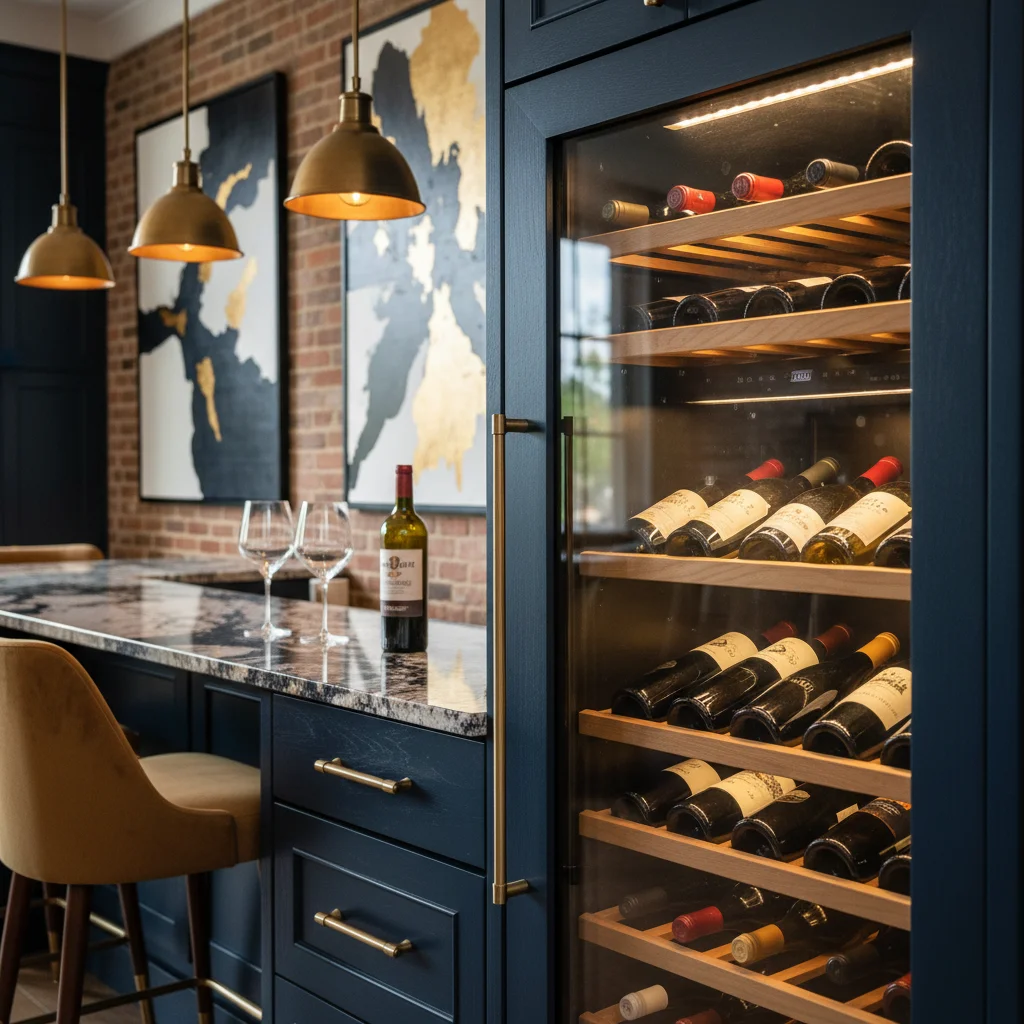
Downtown Denver runs on integrated refrigeration — wine columns built flush into LoDo loft millwork and slim drawers tucked under Golden Triangle island stone. We work how this neighborhood is actually built, then quote a firm number before a panel ever moves.

Wine Cooler Repair in Downtown Denver, Denver

Quick Answers

Where can I get a built-in wine cooler repaired in Downtown Denver?
Denver Sub-Zero Repair is an independent appliance specialist working all of central Denver, from the converted warehouses of LoDo to the residential towers of the Golden Triangle and the condos around Union Station. We handle panel-ready wine columns, dual-zone coolers, and under-counter drawers. Call (720) 770-4189, answered 24/7, with same-day or next-day appointments common.
Does Denver's altitude actually affect a wine cooler?
Yes. At 5,280 feet the air is roughly 15% thinner, so a cooler's condenser sheds noticeably less heat than its manufacturer assumed at sea level. Box that condenser into tight Downtown millwork with one narrow grille and the margin can vanish, letting a unit set for 55 degrees creep warm. We test the sealed system and the cabinet's airflow as one problem, not two.
What does wine cooler repair cost in Downtown Denver?
The on-site diagnostic is a flat $89, and it credits toward the repair the moment you approve the work. We give the exact repair price only after inspecting the unit on site, because a compressor-driven column and a thermoelectric drawer fail for entirely different reasons. The figure you approve is the figure you pay.

When an integrated cooler in a tower kitchen goes wrong

Most wine coolers Downtown don’t fail with drama. The light still glows, the fan still spins, and the only tell is a thermometer reading 63 where it used to read 55 — a slow climb that ruins a stocked rack long before it announces itself. What makes central Denver distinct isn’t the failure list; it’s the install. In a LoDo loft or a Golden Triangle high-rise, the wine unit is almost never a freestanding box. It’s a column framed flush into the cabinetry, a bank of drawers slid beneath a stone island, or a slim cooler pressed into a galley laid out before anyone measured the condenser’s breathing room. So every “warm cooler” splits in two: what broke inside, and what the tight install is doing to it.

The Denver conditions working against it

This city is hard on sealed refrigeration, and three local forces shape almost every wine-cooler call we take Downtown:

  • Thin air at altitude. At 5,280 feet there’s roughly 15% less air to carry off compressor heat. A condenser boxed into millwork with one narrow grille — exactly how Downtown builds — can run right at the edge of its rated capacity, so a small fault tips it out of range.
  • Hard water near 150–250 ppm. Any cooler tied to a humidified cabinet or water line picks up scale that chokes flow and stiffens valves over time.
  • A very dry, high-UV climate. Dry mile-high air shrinks door gaskets early, and the strong sun pouring through floor-to-ceiling tower glass accelerates the wear behind frost and a sweating door.

We read all three into the diagnosis from the first minute rather than treating the cooler like a sea-level appliance.

How a technician pins down the fault

  1. Verify the true cabinet temperature against the set point, so a genuine cooling failure isn’t confused with a sensor lying to the display.
  2. Read the install — grille clearance, airflow around the flush panels, and whatever ventilation a compact condo kitchen actually permits.
  3. Load-test the compressor and sealed system, watching how the unit rejects heat at altitude instead of at the maker’s sea-level assumption.
  4. On dual-zone units, work each chamber separately, since dampers, thermistors, and evaporator fans give out one side at a time.
  5. Inspect the door gasket and any humidifier or water line for dry-climate shrinkage and hard-water scale.

The $89 diagnostic covers that full inspection and credits straight toward the repair the moment you approve it — priced up front, never padded after.

Parts we replace inside the unit

A repair only holds as long as the part that goes back in. We diagnose to a specific component and fit OEM-grade or manufacturer-compatible parts matched to your model and serial: compressors, condenser and evaporator fan motors, thermistors and thermostats, control boards, air dampers, humidifier components, and door gaskets. On a flush-set column in a Union Station condo, a near-fit substitute means a second visit; a part spec’d to your cooler stays put.

Schedule a Downtown visit

Repairs run daily from 8:00 AM to 6:00 PM and the phone is answered 24/7, so same-day or next-day slots are usually open. Call (720) 770-4189 or book online anytime. The $89 diagnostic puts a technician in front of your LoDo or Golden Triangle cooler, names the real cause, and credits straight toward the repair the moment you give the go-ahead.

Frequently Asked Questions

Can you work on a panel-ready wine column that reads as cabinetry?

Yes — that flush, integrated column is the most common unit we open in central Denver. LoDo conversions and Golden Triangle towers are designed so the wine unit disappears into the millwork, so we locate the hidden service access first and protect reclaimed wood, concrete, and surrounding panels before anything is drawn forward.

My building has a freight elevator and fob entry — is that a problem?

Not at all. Secured lobbies, loading docks, freight elevators, and key-fob access are standard across Downtown towers. Share your building's procedure when you book, and we stage tools and common parts to match it so the access logistics don't eat into the repair itself.

Why is one zone of my dual-zone cooler warm while the other is fine?

Each chamber on a dual-zone unit has its own controls, so one side can fail while the other holds. The warm zone usually traces to a failed thermistor, a stuck air damper, or a dead evaporator fan, even though the sealed system is still feeding the good side. We test each chamber on its own before naming the cause.

There's frost inside my cooler and the glass door is sweating — why?

Denver's very dry air stiffens and shrinks door gaskets faster than humid climates do, and a seal that stops gripping lets warm room air bleed onto cold glass. That moisture frosts the evaporator and makes the compressor labor. Behind a Downtown loft's tall, west-facing windows, strong high-altitude UV ages a tired gasket even quicker.

My under-counter wine drawer hums but never gets cold. Fixable?

Usually yes. Many slim drawers in condo kitchens are thermoelectric rather than compressor-driven, and at altitude their heat sinks struggle to dump warmth inside a closed cabinet. We confirm whether the cooling stage actually engages, then check the fan, the thermoelectric module, and the ventilation path before quoting a repair.

Is the $89 service call really credited toward the repair?

Yes. The $89 pays for a full on-site diagnosis, and if you approve the work that amount comes straight off the final total. You see an up-front price before anything opens, and no new line items appear on the bill afterward.

Your Sub-Zero Deserves Better

Denver's experienced independent repair specialists are standing by. Same-day appointments available throughout the metro area.