What this page covers
It’s the middle of dinner in your LoDo loft, the front-left burner won’t hold a low simmer, and the oven you preheated twenty minutes ago still reads cold. Downtown ranges fail in their own way, and the smart first step is naming the exact fault instead of throwing parts at it. A burner that won’t settle, an oven that bakes lopsided, a broiler that won’t catch, an induction zone that drops a level — each points to a different component and carries its own price. We confirm the real cause on site, then give you one clear number before work begins. The $89 service call covers that inspection and comes off the repair if you approve it.
Downtown kitchens and how their ranges fail
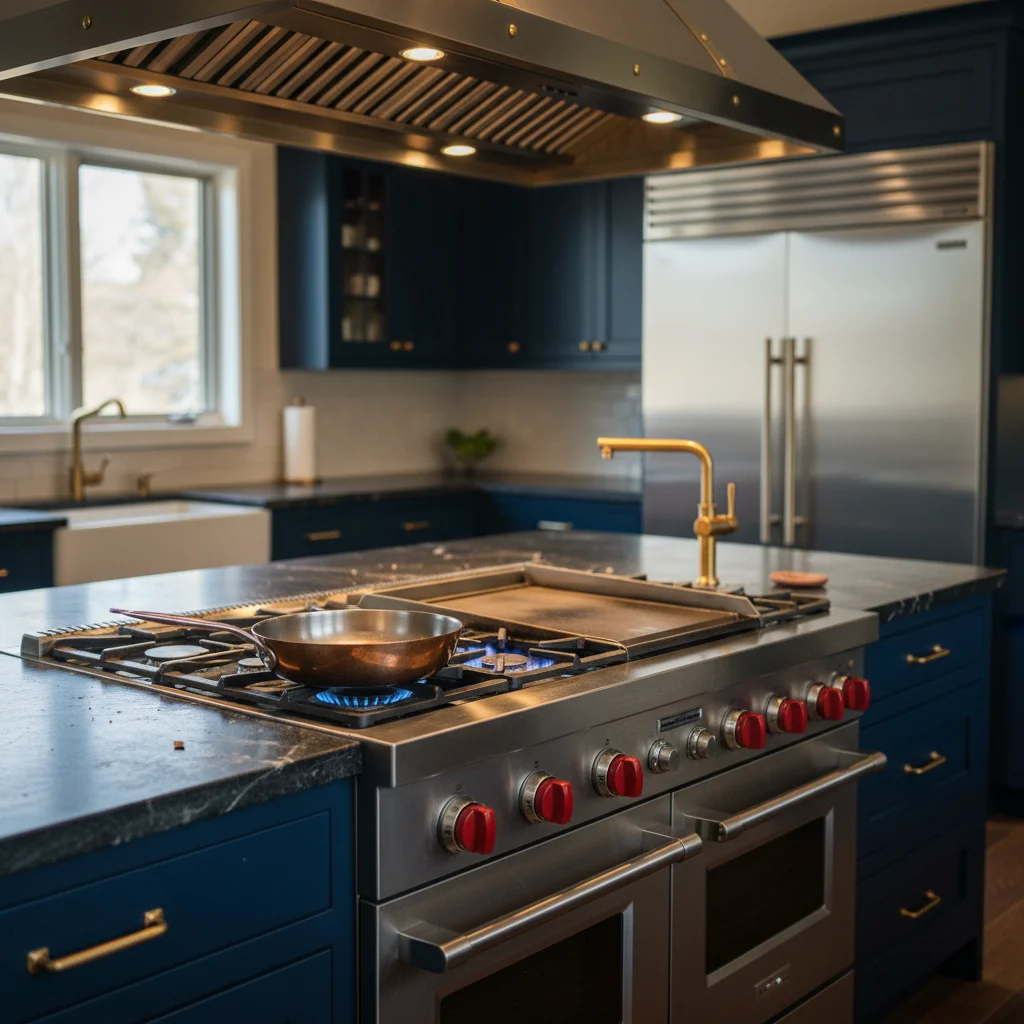
Downtown Denver is loft conversions and glass towers, not suburban tract kitchens. In LoDo’s converted warehouses and the Golden Triangle’s high-rise condos, panel-ready integrated refrigeration is the norm, and the range lives in the same compact, show-piece run — a flush-set pro gas or dual-fuel unit squeezed in beside the hidden Sub-Zero. That footprint photographs beautifully and works against you the moment something drifts.
A range like that is really two appliances sharing a frame: a cooktop above, oven cavities below, either half able to slip out of spec while the other looks fine. Boxed into a tight downtown galley with minimal ventilation, the heat and constant thermal cycling that wear these units have nowhere to go, which quietly cooks the electronics over time.
Faults we trace downtown
- Sealed gas burners — clogged ports, worn electrodes, cracked ceramic insulators, or a valve that won’t hold a steady simmer.
- Spark and ignition — a dead spark module or a harness knocked loose when a heavy range was eased back into its alcove.
- Oven heating — fatigued bake igniters, drifting temperature sensors, and burned-out bake, broil, or convection elements.
- Induction and electric — failed coils, worn infinite switches, corroded terminal blocks, or a power module that has lost its interface.
- Control electronics — the boards and relays that time the oven and keep a surface igniter from clicking on its own.
Our on-site diagnosis
- We watch the fault happen, then check how the range breathes inside its run — a boxed-in high-rise install can overheat its own controls.
- On the cooktop we test the spark module, electrodes, valves, and flame quality, watching for the altitude-rich burn before any part comes off.
- In the oven we measure bake igniter draw, sensor resistance, and the elements under power, pulling stored fault codes where the model keeps them to tell a real failure from a bad sensor reading.
Then you get the cause in plain language and one firm price, with the surrounding millwork protected, before work starts.
The altitude, dryness, and water angle
Three local forces shape every downtown diagnosis. The thin mile-high air leaves a sea-level burner running rich and a marginal igniter short of its firing margin — frequently a tuning fix, not a replacement. The very dry, high-UV climate hardens oven door gaskets early, so heat leaks and the oven cycles harder to hold temperature. And on any water-fed range, Denver’s 150–250 ppm hard water scales the injector valves and supply lines. We read all three before reaching for a part.
Related work in your kitchen
Downtown homes rarely have just one premium appliance acting up at once. We also service the panel-ready built-in refrigerators, freezer columns, and integrated dishwashers crowded into these compact kitchens, and we can look at several units in a single visit so you aren’t booking separate trips up the elevator.
Book your Downtown Denver range repair
Call (720) 770-4189 any hour — the phone is answered 24/7 — or book online. On-site repairs run daily 8:00 AM to 6:00 PM, the diagnostic is a flat $89 applied toward the repair, and you always have an up-front price before we begin. Independent and serving the Denver metro since 2012.