What this repair really involves
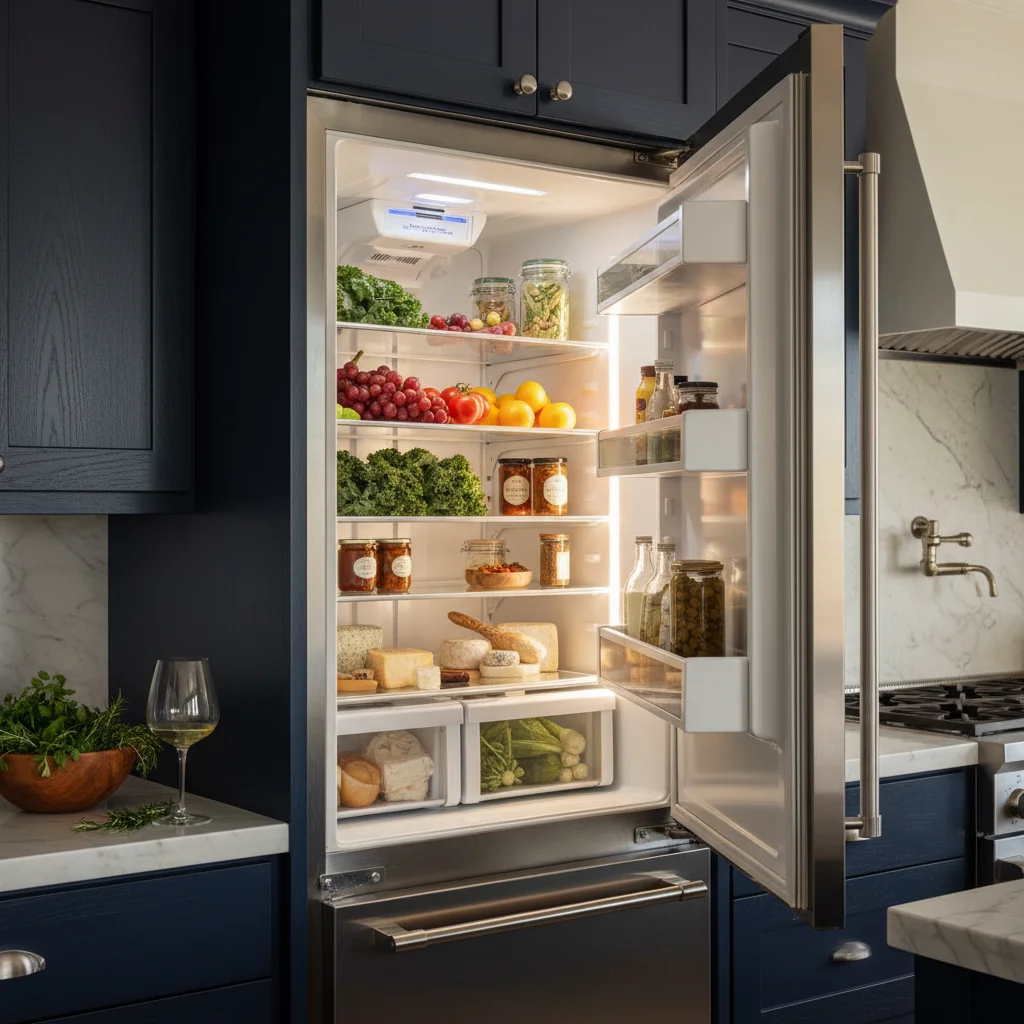
A refrigerator in a Castle Rock custom home is rarely a box you can roll out from the wall. Out here on the bluffs between Denver and Colorado Springs, the kitchen was drawn around the appliance — a tall built-in column flush with the cabinet faces, or a panel-ready unit you cannot tell from the surrounding millwork until you open it. That changes the whole job. Fixing one is less like swapping a part and more like minor surgery inside a finished space: the sealed cooling loop, the airflow path through tight cabinetry, the custom panels, and the floor underneath all have to be respected at once. Get the diagnosis right and the repair is clean and quick. Guess, and you have pulled a $12,000 fridge out of bespoke casework for nothing.
Symptoms and what is behind them
These kitchens fail in patterns we recognize fast. The symptom usually points straight at the cause:
- The fresh-food side warms while the freezer stays cold — often a stalled evaporator fan or a defrost fault, not low refrigerant
- The compressor runs and runs without ever shutting off — typically a choked condenser or a tired start relay
- Frost builds up across the back of the freezer — a defrost heater, sensor, or board mistiming the cycle
- Ice comes out cloudy, hollow, or sparse — almost always hard-water scale in the line or valve
- Water pools beneath a drawer module — a clogged drain or a failing seal
- A door no longer pulls shut tight — a gasket gone stiff in the dry air
Why a built-in needs a specialist here
A column wedged into custom cabinetry runs hotter than a freestanding fridge with room to breathe, and Castle Rock’s elevation compounds it. Above 6,200 feet, the thin air sheds about 15% less heat, so a condenser that is even slightly dust-choked tips a borderline unit warm. That is why we never read the refrigerant charge in isolation — we trace airflow and the sealed system as one circuit. The hard water that scales ice makers across town and the dry, high-UV climate that hardens door gaskets early are local realities a generic tech misses. Working blind around finished panels also risks damage no homeowner should accept; the specialist’s job is to plan the pull, not improvise it.
What a visit looks like
- We locate the model and serial label first — on an integrated unit, the right part and spec flow from it.
- We measure real cabinet temperatures and trace the cooling loop and airflow together, reading fault codes where the unit reports them.
- We protect the cabinetry and floor, then carefully pull the unit only as far as the diagnosis requires.
- You get a plain explanation of the fault and one complete price before any repair begins.
Straightforward pricing
The on-site diagnostic is a flat $89, and it credits toward the repair once you approve the work. You see the full repair price after the inspection — never quoted sight-unseen, never inflated at the end. Whether it is one freestanding fridge or a full integrated suite, the number you approve is the number you pay.
Common questions, answered
Does a slipping fridge really need to be addressed fast? Yes — a sealed-system leak left running can cook the compressor, turning a modest fix into the most expensive repair the appliance has. Will the cabinetry survive the visit? It will; protecting custom millwork is built into how we work. Can you reach the bluffs and the gated communities? We cover all of Castle Rock and Douglas County daily.
If your refrigerator has started to drift, the early call is the cheap one. Phone (720) 770-4189 — answered 24/7, repairs run daily 8 AM to 6 PM — or book online, and a technician will reach your Castle Rock home to find the real cause and quote it up front.