Why a Castle Rock dishwasher quits the way it does
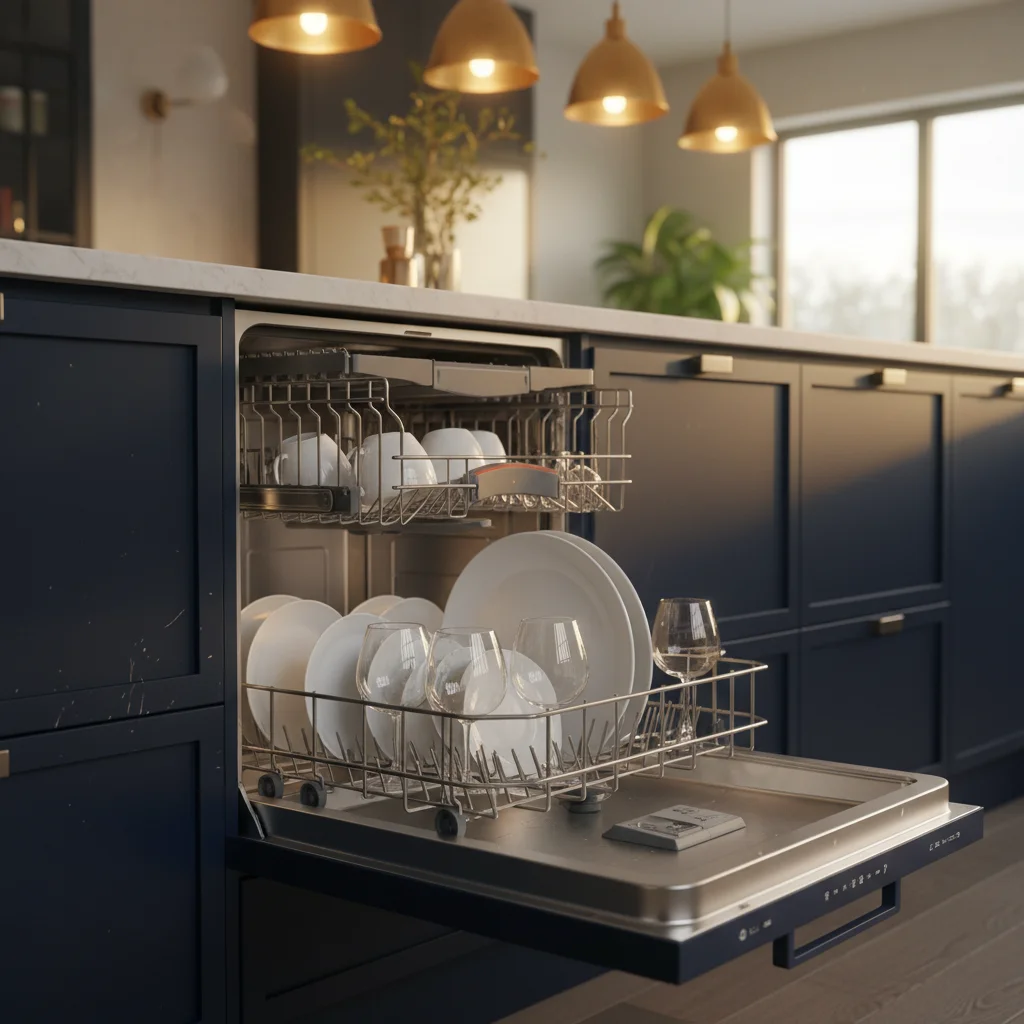
A dishwasher in a Castle Rock custom home rarely dies in one dramatic moment. It slips — a drain that empties a little slower each week, a bottom rack that comes out damp, a faint seep nobody catches until a toe-kick swells. These foothills kitchens, strung along the ridgelines of The Meadows, Founders Village, and the estates climbing Castle Pines Parkway, were drawn around their appliances, and the dishwasher is almost always an integrated unit framed flush into milled cabinetry. That flush install is part of why a small fault hides so well here: the front looks perfect while the water path behind it scales shut. We start every call by tracing the genuine cause, and the $89 diagnostic tells you exactly where you stand before a single panel moves.
The altitude and water angle, read first
Three Denver-metro realities sit behind most Castle Rock dishwasher calls, and we weigh all three on every visit:
- Hard water, roughly 150–250 ppm. This is the single biggest driver out here. Minerals fur the spray arms, the check valve, the heating element, and the narrow supply line together — which is why a slow drain, filmy glassware, and weak drying so often show up in the same machine.
- Thinner air at altitude. Castle Rock sits above Denver’s mile-high mark, near 6,200 feet, where the air is about 15% less dense. Thinner air carries less heat away from a hot load, so the heat-dry stage finishes weaker than the same unit would at sea level — racks stay damp even when the element is fine.
- A bone-dry, high-UV climate. The arid foothills air hardens gasket rubber years early, turning a sound door seal into a bottom-edge leak before its time.
We have built these factors into how we read a dishwasher since 2012, so we test the water path and the dry cycle before condemning a part the climate will only defeat again.
How we diagnose it
- Find the model and serial label on an integrated unit before anything else — the correct part and spec flow from it, and on a flush install that label is rarely where you would expect.
- Confirm how the machine is mounted and map the pull, so we draw it forward only as far as reaching the pump, valve, or hose actually requires, with the cabinetry protected.
- Test the water path end to end — fill valve, spray arms, check valve, and drain pump — separating a scaled supply line from a genuinely dead component.
- Verify the heat-dry stage by checking that the element reaches temperature, rather than blaming damp racks on altitude alone.
- Read fault codes where the unit reports them, then explain the cause in plain terms and quote one complete price.
Components we service
When a part genuinely needs replacing, we fit OEM-grade and manufacturer-compatible parts from verified suppliers, matched to your exact model and serial — drain pumps, control boards, door latches, gaskets, heating elements, inlet valves, and spray arms. But replacement is the last step, not the first. A scaled check valve or element gets a far longer second life from a proper descale than from a new part installed on the same hard water, so we clean the water path and retest before we ever quote a swap.
Same-day scheduling across Castle Rock
Don’t let a slow drain or a quiet leak soak a foothills floor or the finished level below it. Call (720) 770-4189 — answered 24/7 — or book online anytime. Repairs run daily, 8:00 AM to 6:00 PM, with most Castle Rock visits landing same-day or next-day across The Meadows, Founders Village, Castlewood Ranch, and the custom homes along Castle Pines Parkway. The $89 diagnostic gets a technician to your door, pins down the real cause, and credits straight toward the repair once you give the go-ahead.