When the magnetic door seal lets go at 5,280 feet
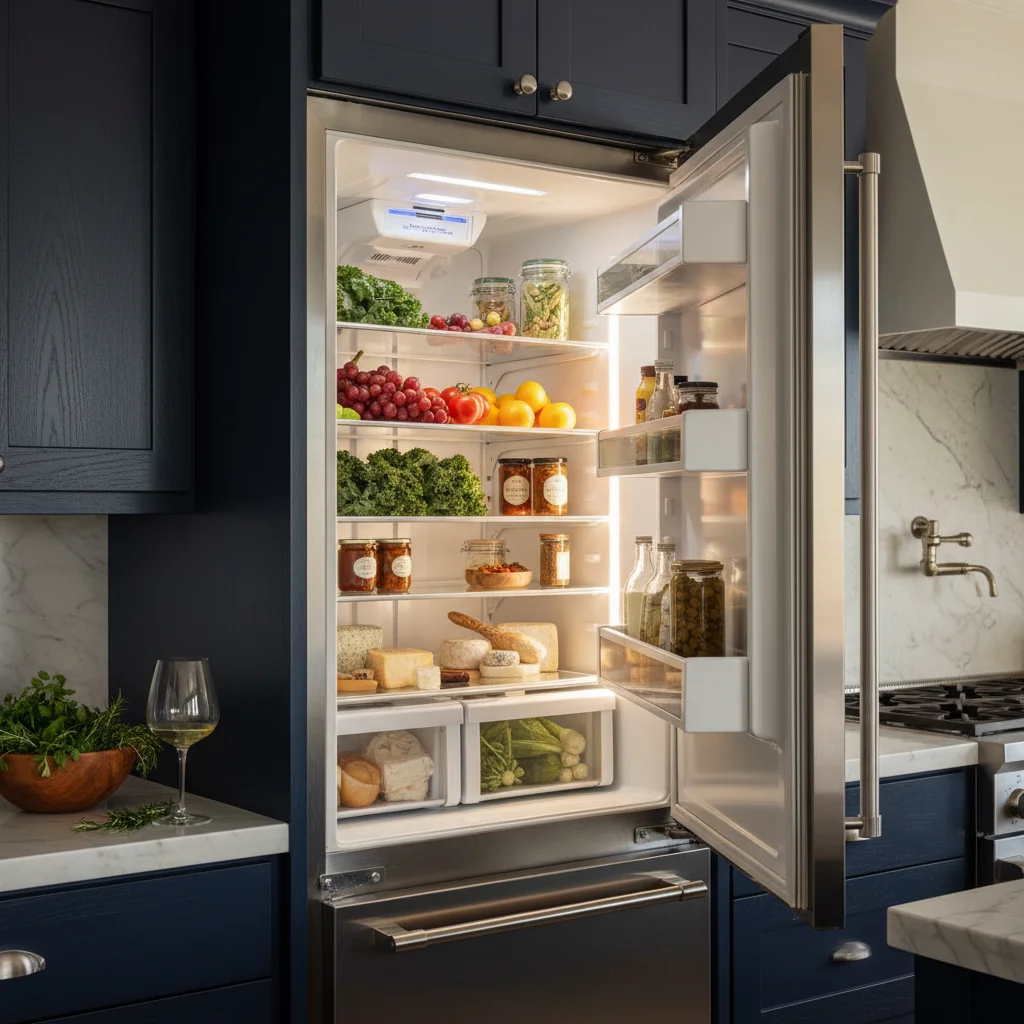
You open the freezer column and the gasket peels back a half-second before the door actually swings — that soft suck of the magnetic seal is gone. Inside, there’s a faint sweat on the back wall, the ice maker is producing hollow, undersized cubes, and the compressor seems to run far longer than it used to between cycles. None of it has tripped an alarm yet, but the unit is quietly working harder than it should. On a Sub-Zero, that combination usually points to a gasket that has dried and shrunk in Denver’s arid air, letting humid room air leak in and load the evaporator. Left alone, it snowballs into frost, short-cycling, and eventually a sealed-system strain that costs far more to fix.
This page is about that kind of repair — the ones specific to how Sub-Zero builds appliances, and how those appliances behave a mile above sea level.
Overview: what makes a Sub-Zero different to repair
Sub-Zero is not a fridge with a premium badge. Since the company helped pioneer built-in refrigeration, its design philosophy has been separate, dedicated cooling — many models run two independent sealed systems, one for the refrigerator and one for the freezer, so each compartment holds its own temperature and humidity without trading air back and forth. That’s a large part of why food and wine keep longer in these cabinets. It’s also why a Sub-Zero rewards a technician who understands sealed-system behavior rather than someone used to swapping parts on a basic top-freezer.
There’s also a cultural reason these appliances are worth saving. Sub-Zero treats its cabinets as long-term equipment, with parts availability and serviceability that stretch far past the lifespan of an ordinary refrigerator. When a sealed system or a control board on a fifteen-year-old built-in can still be repaired, replacing the whole unit — and the surrounding cabinetry it’s integrated into — rarely makes financial sense. The catch is that this only holds true when the diagnosis is correct, because a misread fault on a dual-refrigeration platform can send you chasing the wrong compressor.
A few engineering traits shape every repair we do:
- Dual refrigeration on many built-ins. Two compressors, two evaporators, two control loops. A fault can live entirely on the fresh-food side while the freezer stays fine — or vice versa — which narrows the diagnosis but only if you know where to look.
- Tight built-in cavities. Condensers and fans are tucked into a shallow grille area at the top or bottom of the cabinet. Airflow is everything, and there’s no slack for a dusty coil.
- Sealed columns and integrated panels. Integrated models hide behind custom cabinetry, so a service visit has to respect the installation, not just the appliance.
- Long service life by design. These units are built to be repaired for fifteen, twenty years and beyond. That longevity is an argument for fixing, not replacing — but only when the repair is done correctly.
Because Sub-Zero appliances are engineered to last, the smart money is usually on a precise repair rather than a costly replacement — provided the person diagnosing it actually understands the platform.
Common problems we see on Sub-Zero units
Different product lines fail in different ways, but these are the calls that come in most often across the Denver metro:
- Refrigerator side warming while the freezer stays cold (or the reverse). On dual-refrigeration models this points to one of the two sealed systems, a single failed evaporator fan, or a defrost fault isolated to one circuit.
- Frost or ice building on the back wall or around the evaporator. Usually a defrost heater, defrost thermistor, or control-board timing issue — often accelerated by a leaking door gasket pulling in humid air.
- Compressor that runs almost continuously. A condenser caked with dust, a failing condenser fan, or a worn door seal forcing the system to chase a setpoint it can never reach. In thin Denver air, a marginal condenser tips into this state sooner.
- Ice maker producing hollow, slow, or cloudy cubes — or nothing at all. Frequently a clogged water line, a scaled-up inlet valve, or a fouled fill tube. Denver’s hard water (commonly 150–250 ppm) is hard on these systems.
- Door gaskets that no longer hold a magnetic seal. The dry climate stiffens and shrinks the gasket faster than in humid regions, breaking the seal and dragging down efficiency.
- Vacuum-condenser or service alarms, flashing displays, and stored fault codes. Sub-Zero control boards log diagnostic data; reading it correctly shortcuts a lot of guesswork.
- Wine-storage temperature drift or humidity loss. Beverage and wine columns rely on precise control to protect a collection; a small sensor or fan fault shows up as creeping temperatures.
- Water pooling under or behind the unit. Typically a blocked defrost drain or a cracked drain pan rather than a leak in the water supply.
If your symptom isn’t on this list, it’s still worth a call — these are the patterns, not the limits.
Our diagnostic process
We treat a Sub-Zero like the precision system it is. A visit follows the same disciplined sequence every time:
- Confirm the real symptom. What you noticed and what’s actually failing aren’t always the same part. The technician verifies temperatures in each compartment before touching anything.
- Pull stored fault data. Sub-Zero boards retain diagnostic history. Reading it tells us whether the control logic already caught something — and rules out whole categories of cause.
- Trace the sealed system and airflow path. On dual-refrigeration cabinets we isolate which of the two circuits is involved, then check condenser cleanliness, fan operation, evaporator condition, and the defrost cycle in order.
- Inspect the gasket and door seal. A failing magnetic seal masquerades as a dozen other faults, so we rule it in or out early.
- Explain the cause and quote up front. You get a plain-language description of what’s wrong and a firm price before any repair starts. The $89 service call covers this inspection and is applied to the repair.
No parts cannon, no vague “it’s probably the compressor.” The goal is a diagnosis you can trust and a fix that doesn’t come back next summer.
Denver-specific factors that change the repair
Sub-Zero engineers its appliances for a sea-level world. Denver isn’t one, and that gap shows up in predictable ways.
Thin air at a mile high
At 5,280 feet, the atmosphere is roughly 15% less dense. A condenser rejects heat by pushing air across a coil, and thinner air carries away less heat per pass. A coil that would run cool in Houston runs warmer here, so a Sub-Zero that’s even slightly dusty, or low on refrigerant charge, struggles earlier and harder. We account for that when we judge whether a sealed system is truly faulty or simply fighting the altitude.
Hard water on the ice and water side
Denver-area water often runs 150–250 ppm in dissolved minerals. That scale settles in inlet valves, fill tubes, and water lines, choking ice production and clouding cubes long before anything dramatic fails. On ice makers and dispensing systems we look at scale first, because it’s the most common root cause we find here.
A dry, high-UV climate
Colorado’s low humidity is brutal on rubber and foam. Door gaskets dry out, shrink, and lose their magnetic grip faster than they would in a damp climate, which is why seal failures top our Denver call list. Strong high-altitude UV adds to the wear on any exposed trim and seals over the years.
Put together, these factors mean a Sub-Zero in Denver ages on a different schedule than the same model in Seattle — and a repair that ignores them is a repair that returns.
Other premium brands we work on
Sub-Zero is our namesake and our focus, but many Denver kitchens pair it with a matching cooking or dish suite, and we service those too. Alongside Sub-Zero we repair refrigeration and related appliances from Wolf, Viking, Thermador, Miele, Gaggenau, Dacor, Monogram, JennAir, Bosch, KitchenAid, Fisher & Paykel, and Liebherr. If your Sub-Zero refrigerator shares a kitchen with a Wolf range or a Cove dishwasher, you can keep your service to a single specialist who understands high-end equipment rather than juggling several companies.
That cross-brand context matters more than it sounds. Denver’s altitude doesn’t only affect refrigeration — on a gas range or cooktop, the thinner air changes the fuel-to-air ratio at the burner, which is why orifice sizing and combustion tuning come up so often on high-end cooking equipment here. A technician who already adjusts refrigeration diagnoses for elevation brings the same instinct to the rest of the kitchen. When you’re booking a Sub-Zero visit, mention any other premium appliance acting up and we can often handle it on the same trip.
Book your Sub-Zero repair
Serving the Denver metro since 2012, we keep the process simple: an honest, altitude-aware diagnosis, OEM-grade and manufacturer-compatible parts from verified suppliers, and up-front pricing after the technician sees the unit. Repairs run daily from 8:00 AM to 6:00 PM, and the phone is answered around the clock so you can reach a person whenever a Sub-Zero acts up.
Ready to get your Sub-Zero back to spec? Call (720) 770-4189 or book online. The $89 service call is applied to your repair, and same-day or next-day appointments are usually available across Denver and the surrounding suburbs.