How a Liebherr is built — and why that changes the repair
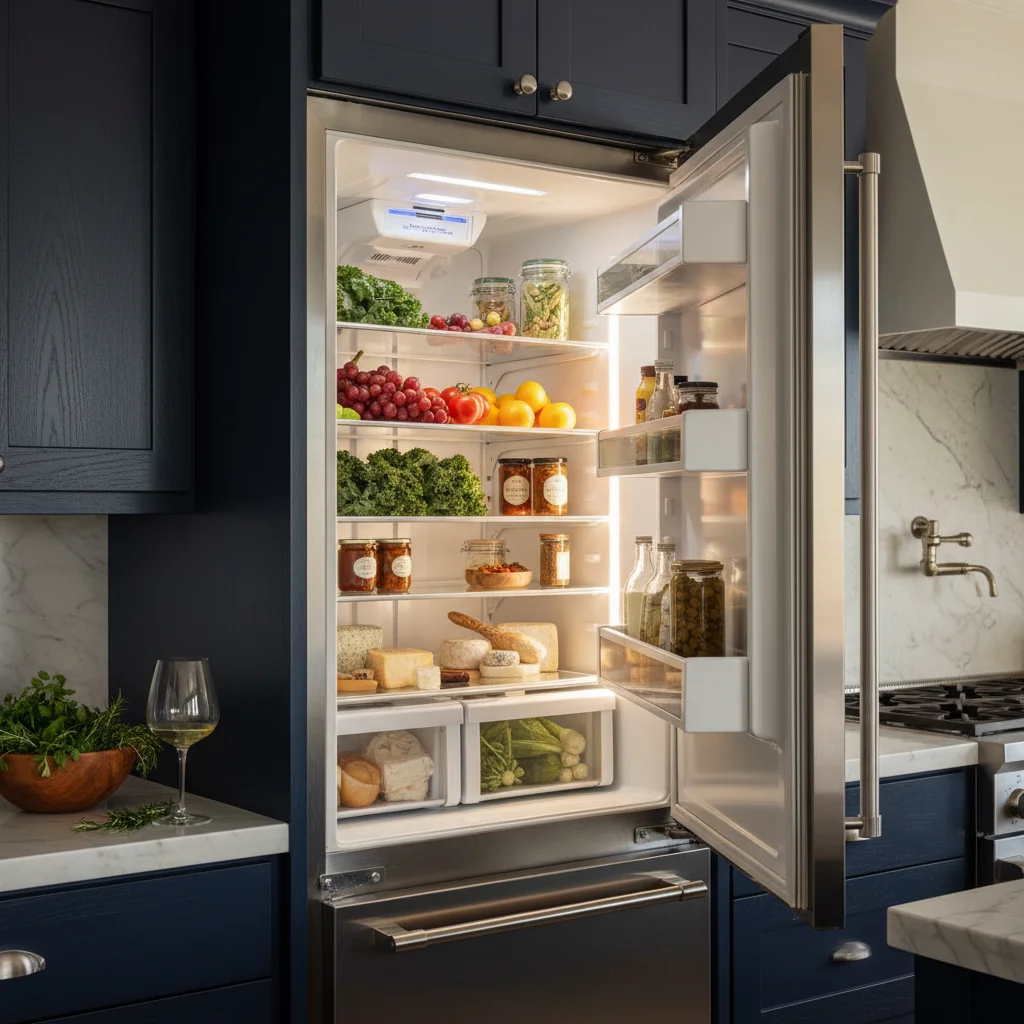
Most refrigerators are forgiving; a Liebherr is precise, and that precision is the whole point. The German engineering centers on holding each compartment dead-steady: BioFresh drawers sit just above freezing to stretch the life of produce and proteins, DuoCooling runs two fully separate refrigeration circuits so the fridge and freezer never share air or trade humidity, and PowerCooling fans push even, measured airflow rather than letting cold pool. On the freezer side, NoFrost automates the defrost cycle so ice never builds.
That architecture is lovely to live with and specific to diagnose. Because the cooling is so tightly controlled and so compartmentalized, a fault rarely takes the whole unit down — it shows up as one zone drifting while everything else holds. The job is to find the single sensor, fan, damper, or circuit that slipped, not to throw parts at a healthy machine.
We are an independent service for the Denver metro and have worked on these units since 2012. We are not affiliated with, endorsed by, or sponsored by Liebherr.
Symptoms and what usually causes them
- One zone warms while the rest stays cold. A BioFresh drawer or the fridge section drifting up while the freezer holds usually means a sensor, the evaporator fan, a stuck damper, or a defrost fault — not a dead compressor.
- Frost or ice where there shouldn’t be. On a NoFrost model, a sheet of frost on the back wall points straight at the defrost circuit: heater, defrost sensor, or control timing.
- It runs nonstop and never cycles off. Typically a clogged condenser, a slowing fan, or a gasket leaking conditioned air — the unit working hard to recover lost efficiency.
- Water pooling inside or on the floor. Almost always a frozen or blocked defrost drain backing up; sometimes condensation from a tired seal.
- Ice or water-dispenser trouble on plumbed models. Hollow cubes, slow ice, or no water often trace to the inlet valve, the filter, or — in Denver — scale narrowing the line.
- A fault code or flashing alarm on the display. Liebherr stores faults; the code is a starting point for diagnosis, not the final verdict.
Why a specialist matters here
Liebherr’s separate circuits and sensor-driven control reward someone who reads the system before reaching for a part. A DuoCooling unit has two evaporators and two sealed circuits — a generic tech who assumes a shared system can chase the wrong half for an hour. Control boards are the expensive answer and rarely the right first one; sensors, fans, and connectors impersonate board failures constantly, so we rule those out before condemning anything pricey.
What an actual visit looks like
The technician works the airflow and sealed-system path in order rather than guessing.
- Confirm the real symptom with measured compartment temperatures, not just the panel reading.
- Read the stored fault data and check sensors before condemning any electronics.
- Trace airflow, defrost, and the correct cooling circuit, since most “warm Liebherr” calls live there.
- Quote one firm price in plain language, with the $89 diagnostic credited toward the repair if you go ahead.
Pricing
The diagnostic is a flat $89, applied to the repair if you approve it. The exact repair price is quoted only after the on-site inspection — never guessed over the phone — with no surprise charges afterward, and OEM-grade parts matched to your model.
Denver factors and your next step
Repairing a Liebherr here genuinely differs from sea level. At 5,280 feet the thinner air carries away roughly 15% less condenser heat per pass, so a marginally dusty coil or slow fan strains sooner and small refrigerant-charge issues surface earlier. Denver’s very dry climate stiffens and shrinks door gaskets faster, breaking the tight seal these units depend on, while hard water at 150–250 ppm scales ice makers, inlet valves, and water lines on any plumbed model.
If your Liebherr is warming, frosting, leaking, or throwing a code, the sooner we see it the smaller the fix tends to be. Call (720) 770-4189 — answered 24/7 — or book online at https://nexfield.pro/crm/book?u=33. Repairs run daily 8 AM to 6 PM, same-day or next-day across Denver.