The repair, explained
A cooktop looks simple from above — a flat surface and some controls. A Jenn-Air cooktop is anything but, because the brand builds the same job three different ways, and the surface tells you almost nothing about the machinery underneath.
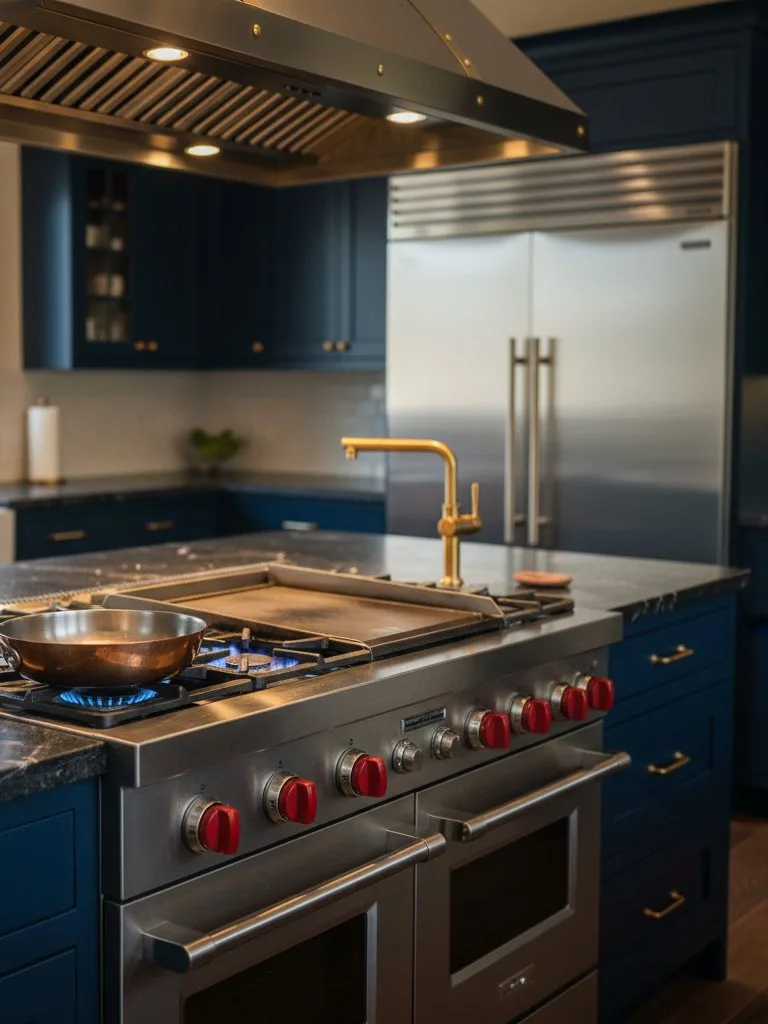
On an induction top, a glass-ceramic panel hides copper coils, an inverter power board, and a cooling fan; the heat happens in the pan, not the glass. On a radiant electric top, ribbon elements glow under the ceramic and a control board pulses them on and off. On a gas top, sealed burners draw a spark from an ignition module through precisely sized orifices. Three architectures, three failure libraries — and a repair aimed at the wrong one fixes nothing.
We’re an independent appliance company serving Denver-metro kitchens since 2012. To be clear: we are not affiliated with, endorsed by, or sponsored by Jenn-Air, Whirlpool, or any manufacturer. We’re technicians who know how these surfaces are wired beneath the glass — and how a mile of altitude quietly changes the way they run.
Symptoms and what’s behind them
The surface gives you the clue; the cause lives below it. Common Jenn-Air cooktop faults break down like this:
- Induction zone cuts out or flashes a fault — overheating inverter board, a stalled cooling fan, a cracked coil, or pan-detection losing contact.
- Touch controls dead or erratic — moisture under the glass, a failed touch membrane, or a control board that’s lost its reference.
- Radiant element won’t heat or stays full-on — an open ribbon element, a stuck infinite switch, or a relay welded on the board.
- Gas burner clicks but won’t light — fouled igniter, drifted spark gap, a weak ignition module, or a clogged orifice.
- Burner lights yellow or lazy — an orifice mis-tuned for thin air, often surfacing only at 5,280 feet.
Why a specialist matters here
Generic fixes treat a cooktop like a toaster — find the dead heater, replace it. Jenn-Air’s induction and electronic-control tops don’t reward that. An induction board failure and a coil failure throw similar symptoms but need different parts, and guessing wrong on a board is expensive. We isolate the bad component with meter readings, not by swapping the costliest part first.
Denver’s conditions tilt the odds, too. Thin air at altitude means gas burners run a leaner air-fuel mix, so orifices and ignition tuned at the factory often need a second look here. Hard water — roughly 150 to 250 ppm across the metro — leaves mineral film that creeps under control glass and onto burner caps. And the dry climate wears the seals that keep moisture out of the electronics below.
What a visit looks like
- You describe the symptom and tell us which surface — induction, radiant, or gas — you have.
- On site, we read the fault directly: board voltages and the fan on induction, element and switch continuity on radiant, spark and gas flow on gas tops.
- We pin the failure to one component, then quote the exact repair before any work begins.
- With approval, we install OEM-grade parts matched to your model and confirm the whole surface runs clean.
Pricing
The on-site diagnostic is $89, and it’s credited toward the repair if you proceed. Because the parts inside an induction, radiant, and gas Jenn-Air cooktop are so different, we give the exact repair price only after seeing the unit in person — never a phone estimate, never a surprise on the invoice.
Common questions, answered fast
Is a cracked glass top repairable? The glass itself is replaced, not patched; we confirm the coils and board beneath survived the crack before quoting.
Why does only one zone fail? Each burner, element, or coil is its own circuit — one can die while the rest work perfectly.
Do you handle the downdraft on cartridge models? Yes — the blower under the cartridge bays is part of the same job.
If your Jenn-Air cooktop is misbehaving, call (720) 770-4189 anytime, or book online. We’ll bring the right parts and an honest price — same-day or next-day across Denver.