A wine cooler almost never quits all at once. The interior light still glows, the fan still spins, but the cabinet that held a steady 55 for years now reads 62, and the bottles racked inside are warming a degree at a time. In a stocked unit that quiet drift is the entire problem. So the repair starts the moment the temperature stops holding: get a technician in front of the cooler, find what actually changed, and stop the climb before the rack pays for it — with the price settled up front, never after.
Getting our bearings in Westminster
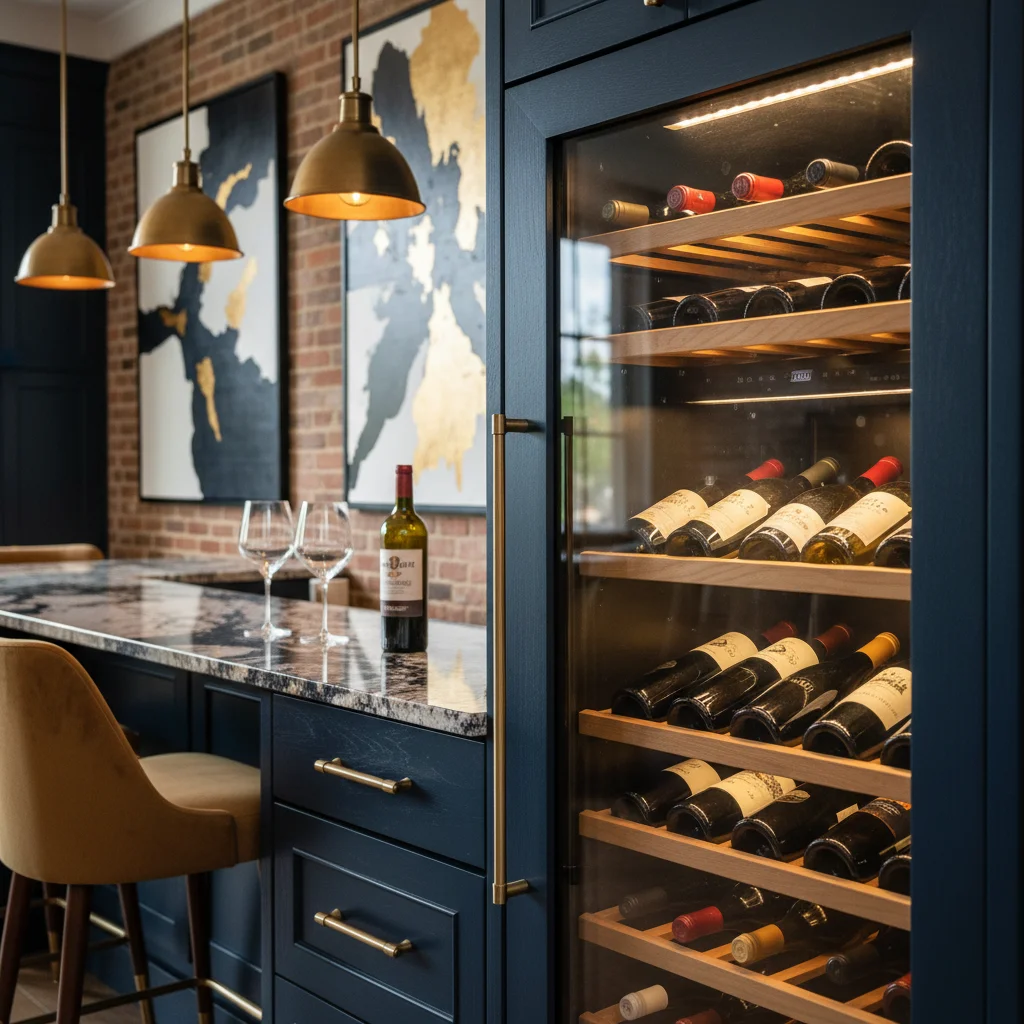
Westminster runs the full span from settled north-metro streets to the newer walkable enclaves, and the wine coolers track that mix. A house up in Legacy Ridge near the golf course often carries a freestanding or under-counter unit added during a kitchen refresh; the newer Bradburn townhomes off Lowell tend to ship a wine column boxed flush into cabinetry that was drawn before anyone measured the condenser’s breathing room. So “the cooler is warm” really splits into two questions: what failed inside, and what the install is doing to make it worse.
What tends to go wrong here
Across Westminster the same short list keeps surfacing:
- The cabinet won’t hold its set point, or one half of a dual-zone runs warm while the other stays exactly right.
- A new hum, buzz, or rattle carrying through custom millwork in an otherwise quiet kitchen.
- Frost building on the back wall, condensation sweating across the glass door, or water pooling at the base.
- A thermoelectric under-counter drawer that powers up but never pulls down to temperature.
- Lights and display working fine while the cooling stage never engages — or the unit short-cycles without ever reaching its target.
Parts that decide how long the fix lasts
A cooler is only as durable as the few components doing the real work: the compressor, the evaporator and condenser fans, the thermistors reading each zone, the control board, and the door gasket holding the seal. We match those to your exact model and serial with OEM-grade or manufacturer-compatible parts from verified suppliers, because a generic substitute on a sealed-system part is where a “fixed” cooler starts drifting again a season later.
The Denver forces underneath it
At roughly 5,280 feet the air is about 15 percent thinner, so every condenser sheds less heat than its maker assumed at sea level. In an open Legacy Ridge kitchen that margin quietly evaporates; in a column boxed into Bradburn cabinetry it can be the whole gap between steady cellar temperature and a slow climb out of range. The dry, high-UV climate hardens door gaskets early — usually the story behind frost and a sweating glass door — and Westminster’s hard water, commonly 150 to 250 ppm, scales any line feeding a humidified wine cabinet. We read those three forces into the diagnosis from the first reading.
How to book a Westminster visit
Repairs run daily from 8:00 AM to 6:00 PM, and the phone is answered 24/7, so same-day or next-day slots are usually open. Call (720) 770-4189 or book online anytime. The $89 diagnostic brings a technician to your door — Bradburn townhome or Legacy Ridge house — pinpoints the true cause, and credits straight toward the repair the moment you approve it. No guesswork, no surprise line items. As an independent shop serving the Denver metro since 2012, we’re not affiliated with any manufacturer.